
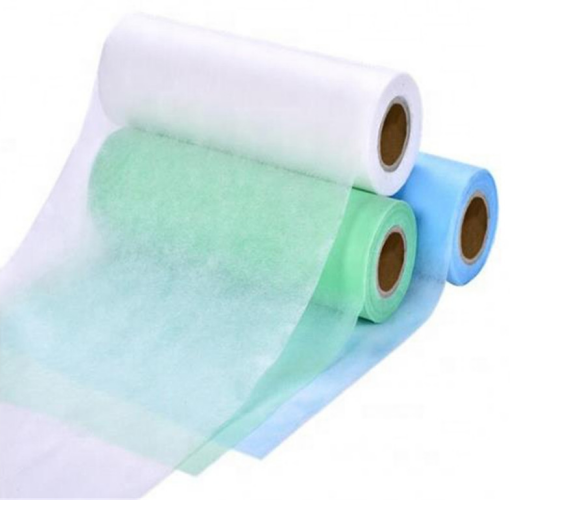
The global personal care and hygiene market is currently witnessing a fundamental shift in competitive strategy. While brands previously focused almost exclusively on the marketing of finished products, the industry now pivots toward “material origin competition.” Success in the modern retail landscape depends on the structural and chemical integrity of the raw materials used. As a premier Wholesale Spunlace Cotton Roll Manufacturer, Shenzhen Profit Concept International, through its Bowinscare brand, addresses this shift by optimizing fiber ratios and manufacturing precision. By providing high-stability rolls for downstream manufacturers of cotton pads and wet wipes, the organization enables brands to achieve higher product premiums through superior material science.
Technical Decoupling: Spunlace Technology and Fiber Quality
At the heart of modern nonwoven innovation lies the high-pressure spunlace process. This technology utilizes fine, high-pressure water jets to entangle fibers physically rather than bonding them with chemical resins or thermal melting. For manufacturers producing 100% cotton fabric rolls, this method is essential for maintaining the natural purity of the fiber. Because the process avoids chemical adhesives, the resulting material remains hypoallergenic and exceptionally soft, making it ideal for medical and cosmetic applications where skin sensitivity is a primary concern.
Beyond safety, the spunlace technique determines the mechanical performance of the fabric. In high-speed automated cutting and conversion lines, material consistency is paramount. Bowinscare engineers the entanglement of fibers to ensure a balanced MD (Machine Direction) and CD (Cross Direction) tensile strength. This balance prevents the material from stretching or warping during industrial processing. Consequently, B2B clients experience fewer machine jams and more precise cutting, which directly correlates to higher production efficiency and reduced waste. The absence of lint and the high structural integrity of these rolls set a rigorous benchmark for the industry.
The Material Matrix: From Cotton Rolls to Polypropylene Solutions
Diversification in material science allows manufacturers to serve a wide array of industrial needs. For instance, roll materials designed specifically for disposable cotton pads must prioritize liquid retention and surface smoothness. By controlling the pore size distribution within the cotton matrix, manufacturers can influence the liquid diffusion rate. This ensures that when a consumer applies toner or cleanser, the fluid spreads evenly across the pad rather than soaking through instantly. This level of microscopic detail transforms a simple commodity into a high-performance tool for skincare.
Parallel to cotton-based innovations, the production of polypropylene (PP) spun-bond nonwoven fabrics serves different functional requirements. PP materials offer high strength and barrier properties, making them indispensable for products like disposable bed sheets or protective covers. While cotton provides absorbency and softness, PP spun-bond materials excel in durability and cost-effectiveness. Understanding the distinct application scenarios for these materials allows procurement officers to select the exact substrate that aligns with their end-use requirements. Whether the goal is the gentle touch of a facial wipe or the rugged reliability of an industrial towel, the material matrix provides a solution.
Supply Chain Efficiency: Industrial Response and Customization
Operational excellence in the nonwoven sector requires more than just advanced machinery; it demands deep industrial heritage. Shenzhen Profit Concept International, invested by Guangdong Little Cotton Nonwoven Products Co., Ltd., operates a 28,000-square-meter facility backed by over 20 years of experience. This scale allows for the management of non-standard orders with a level of precision that smaller factories cannot match. With more than 200 employees, the facility oversees the entire lifecycle of production, from raw fiber selection to final customs clearance.
For B2B partners, the ability to customize specific parameters is a critical advantage. The factory provides precise control over grams per square meter (GSM), roll width, and roll diameter. This customization ensures that the rolls fit perfectly into the client’s existing machinery without the need for additional modifications. By optimizing the width and length of the rolls for specific production runs, businesses can often reduce raw material edge waste by 5% to 10%. This efficiency does not just lower costs; it also supports sustainability goals by maximizing the utility of every kilogram of fiber.
One-Stop Solutions for Global Distribution
Navigating the complexities of the global supply chain is often a barrier for many brands. To mitigate this, a comprehensive service model is necessary. This “one-stop” approach encompasses equipment sourcing, material testing, packaging design, and transportation logistics. By providing a holistic solution, the manufacturer removes the burden of multi-vendor management from the client. This is particularly valuable for international customers who require rigorous quality assurance and smooth customs transitions across different regulatory regions.
The longevity of the company’s industry presence—spanning over two decades—has allowed for the refinement of pre-sales and after-sales support. This expertise ensures that clients receive not just a product, but a strategic partnership. During the factory construction planning phase or the launch of a new product line, the supplier provides technical insights that prevent common manufacturing pitfalls. This proactive communication builds trust and ensures that the finished products, whether they are compressed towels or cotton tissues, meet the highest global standards.

Defining Industry Standards from the Source
As the demand for high-quality nonwoven products continues to grow, the importance of the material source cannot be overstated. The synergy between high-pressure spunlace technology and a robust industrial infrastructure creates a foundation for innovation. Brands that prioritize the structural integrity and purity of their raw materials will inevitably lead the market in consumer satisfaction. By focusing on low-lint, high-strength, and hypoallergenic fabric rolls, manufacturers help define what “gentle skin care” truly means in a commercial context.
The future of the nonwoven industry lies in the continued refinement of these sustainable and high-performance fibers. Through strategic research and development, the transition from raw cotton to a sophisticated fabric roll becomes a testament to modern engineering. Global brand owners who collaborate at the material level can build a competitive advantage that starts at the very beginning of the production line. This full-chain approach ensures that every finished product reflects the quality and innovation of its source.
For more information on wholesale spunlace cotton rolls and nonwoven material solutions, please visit: https://www.bowinscare.com/.
Post time: Feb-02-2026