
Choosing the right Cotton Rounds can influence product quality, customer satisfaction, and daily operating costs. The best option is rarely the cheapest pack on a supplier’s list. It must match your business model, customer expectations, and intended use.
A beauty retailer may prioritize a smooth surface, clean edges, and attractive packaging. A spa may need larger rounds that hold toner without tearing. A clinic or professional skincare practice may require consistent sizing, low lint, sealed packaging, and documented quality controls. Practical testing matters. Press each round against damp skin, check whether fibers remain behind, and measure how much liquid it absorbs before breaking apart. Small details become expensive when repeated across thousands of units.
Supplier reliability deserves equal attention. Review material composition, production standards, batch consistency, shipping performance, and traceability records. Ask for samples before committing to a large order. Confirm whether packaging protects the rounds from moisture, dust, and compression during transport. Certifications can support trust, but they should be verified rather than accepted as decoration. Claims about softness or sustainability also need evidence.
No product wins every category. A thicker round may feel premium but consume more lotion. A lower-cost option may perform well, yet create more waste through tearing. We have seen samples look excellent in a showroom and disappoint during routine use. That is why purchasing decisions should combine testing, supplier communication, and customer feedback. This guide explains the key factors businesses should examine before selecting Cotton Rounds for dependable, responsible growth.
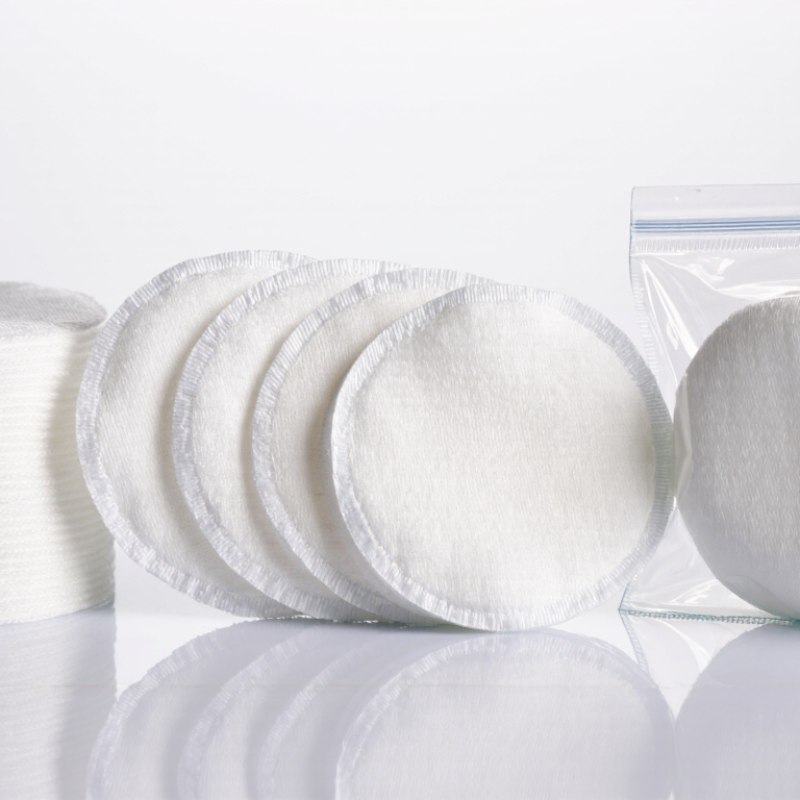
Defining your business’s cotton round requirements starts with the work your customers actually perform. A skincare clinic may need soft, low-lint rounds for toner application. A salon may prioritize absorbency for polish removal. A retailer may focus on pack size, shelf appearance, and consistent shape. Write down each use before contacting suppliers.
Specify the diameter, thickness, edge finish, material composition, and absorbency level. A 50-millimeter round may suit facial care, while larger sizes can reduce product waste. Cotton purity matters when the product touches sensitive skin. Ask for samples and inspect them under bright light. Check loose fibers, uneven edges, odor, and tearing during wet use. Small defects become expensive complaints.
Your purchasing plan should also define monthly volume, packaging preferences, storage conditions, and acceptable quality variation. Request production samples, test reports, and clear inspection standards. Verify that labeling and materials meet the regulations in your target markets. Do not rely on photographs alone. They can hide compression and rough surfaces. A perfect specification is rarely created in one attempt. Adjust it after testing real products with staff or customers. One detail may be missed. That is normal, but ignoring it is not.
When choosing cotton rounds for a business, compare fiber structure before comparing price. Carded cotton feels soft but may release more lint. Combed cotton usually has cleaner, more aligned fibers. Long-staple fibers can improve surface smoothness and reduce loose strands. However, fiber length alone does not guarantee better performance.
Absorption depends on more than cotton content. Loosely packed rounds absorb liquid quickly, while dense rounds hold more fluid overall. A practical test uses the same liquid volume, contact time, and squeezing method for every sample. Record how much liquid each round retains after ten seconds. Check both sides. Some rounds absorb well on one surface but remain dry underneath. That detail matters during cleaning, sampling, or controlled application.
Inspect wet strength as well. A round that tears during use creates waste and slows production. Examine lint under bright light, then rub the wet round across a dark surface. Supplier test reports can support decisions, but internal trials remain essential. Our first comparison favored the softest sample, yet it deformed too easily during handling. That was a useful correction. For routine work, medium absorption may be more practical than maximum absorption. It can provide better control and reduce dripping. Ask for fiber composition, basis weight, layer count, and finishing details. Small differences often become noticeable after thousands of units.
Choosing cotton rounds for a business starts with size, thickness, and layer construction. A 50–60 mm round suits toner and eye-area applications. Larger 70 mm rounds cover more skin but may increase material use. Measure diameter after drying, not only from the supplier’s specification. Cotton can relax during finishing.
Thickness affects liquid holding and user feel. Two thin layers may release lotion quickly, while three or four layers usually provide better strength. Excess thickness can waste formula and slow production. Check caliper, basis weight, absorbency, wet tensile strength, and lint under actual use conditions. Test them.
USDA’s Cotton: World Markets and Trade report forecasts approximately 116.9 million 480-pound bales of global cotton production for 2024/25. Supply is broad, but fiber quality still varies by origin and processing. Textile Exchange’s 2024 Organic Cotton Market Report recorded about 222,000 metric tonnes of organic cotton fiber production in 2022/23, showing why certified supply may require earlier planning. These figures describe cotton availability, not finished-round performance.
In practical sampling, I have seen very soft rounds tear when saturated. Softness alone misleads. A better trial uses the customer’s actual liquid, packaging, and dispensing speed. Compare one, two, and three-layer constructions. Record liquid pickup, release, edge fraying, and residue after wiping. My imperfect habit was judging dry samples first. That missed the real failure point: wet handling. Request batch-level test results, fiber composition, and layer-bonding details before approving a purchase.
When choosing cotton rounds for business use, softness is more than a pleasant feel. It affects customer comfort, product presentation, and repeated handling. Press one against clean skin and notice any rough edges or loose fibers. A smooth surface should feel gentle without collapsing immediately. Very soft cotton can sometimes lack structure. That trade-off deserves attention.
Strength matters during packaging, application, and storage. Test each round dry, then lightly dampen it. Pull from opposite sides and check whether it stretches, tears, or sheds. A reliable round should keep its shape while absorbing liquid evenly. Surface performance also matters. Look for consistent thickness, neat edges, and minimal lint after wiping glass, skin, or equipment surfaces. Results may vary between production batches, so one sample is not enough.
Tips: Create a simple inspection sheet. Record softness, tear resistance, absorption speed, lint, and edge quality. Compare samples under the same conditions. A white test surface makes loose fibers easier to see. Ask suppliers about fiber composition, dimensions, packaging, and quality checks. Do not rely only on photographs. In my experience, a round that looks premium may feel ordinary in use. I have also found that overly compressed cotton can absorb slowly, even when it appears strong. Recheck your standards after customer feedback, because the first specification may not be the right one.
Compare softness, strength, and surface performance using a normalized 0–100 purchasing benchmark.
Higher scores indicate better overall performance. Softness reflects comfort during skin contact, strength reflects resistance to tearing during dry and wet use, and surface performance reflects smooth coverage with low lint and fiber shedding.
When choosing cotton rounds, inspect the package before judging the product. A sealed pouch should resist dust, moisture, and crushing during transport. ISO 11607-1 requires validated packaging systems for terminally sterilized medical devices. Cosmetic cotton rounds may not be sterile. The label must say so clearly.
Ask suppliers for seal-strength results, material specifications, and batch traceability. ASTM D4169 testing can simulate vibration, compression, and repeated drops during distribution. A carton that survives a warehouse shelf may fail inside a delivery van. That detail is easy to miss. It matters.
Tips: Prefer individually wrapped rounds for clinical or sensitive applications. Choose resealable bags for routine beauty use. Reject packs with loose fibers, broken seals, yellowing, or a damp feel. Keep cartons off the floor, away from sinks, and inside a dry, temperature-controlled area. Follow the supplier’s storage range, but review humidity carefully. Cotton absorbs moisture faster than many buyers expect.
The World Health Organization’s 2022 report on infection prevention emphasizes clean handling and protected supplies. It does not make ordinary cotton sterile. Therefore, do not accept vague claims such as “hospital quality.” Request sterilization method, expiration date, and supporting test records. Storage rotation should follow first-expire, first-out practice. Real warehouses are imperfect. A written inspection log still catches surprising problems.
How to Choose the Best Cotton Rounds for Your Business
Supplier assessment should begin with evidence, not a polished sample. Textile Exchange’s Materials Market Report 2024 recorded global fiber production at 124 million tonnes in 2023, with cotton representing about 22%. That scale does not guarantee dependable quality. Request recent test results for absorbency, lint release, diameter, thickness, and weight. Compare samples from three production lots, not one carton. Consistency matters. Check whether the supplier controls fiber sourcing, cutting, packaging, and moisture protection. Ask for batch records and a written process for handling defects. Small differences become obvious when staff use hundreds of rounds daily.
Pricing needs a wider lens. USDA’s Cotton: World Markets and Trade report projected approximately 116.9 million 480-pound bales of global cotton production for 2024/25. Harvest conditions, freight, energy, and exchange rates can move input costs quickly. Seek quotations with clear minimum order quantities, delivery terms, packaging details, and validity periods. Calculate the delivered cost per usable round, including damaged or uneven pieces. A cheaper unit price may hide higher waste. Test it. Run a controlled trial across several cartons, then record lint, tearing, absorption speed, and customer complaints. My own purchasing reviews would also challenge one assumption: a supplier with perfect first samples may still struggle during peak demand. Build a backup source before consistency becomes a problem.
Start with the customer’s actual task. Clinics may need soft, low-lint rounds, while salons may need stronger absorbency. Retailers may prioritize pack size and uniform appearance. Write down every use.
Define diameter, thickness, edge finish, material composition, and absorbency. A 50-millimeter round may suit facial care. Larger rounds can reduce product waste. Cotton purity matters for sensitive skin.
Photographs can hide rough surfaces and compression. Inspect samples under bright light. Check loose fibers, uneven edges, odors, and tearing when wet. Do not guess.
Compare samples from at least three production lots. One carton cannot prove consistency. Test diameter, thickness, weight, lint release, and absorbency. Small differences become obvious during daily use.
Request minimum order quantities, delivery terms, packaging details, and quotation validity periods. Include moisture protection requirements. A low unit price may hide higher waste.
Calculate the delivered cost per usable round. Include shipping, damaged pieces, uneven pieces, and disposal. Then compare results across several cartons. Test it.
Ask for recent test reports, batch records, and written defect procedures. Useful results cover absorbency, lint release, diameter, thickness, and weight. A polished sample is not enough.
Run a controlled trial with staff or customers. Record absorption speed, lint, tearing, product waste, and complaints. Use real products in normal conditions. One detail may be missed.
Demand peaks can expose weaknesses that samples do not show. Keep another qualified source available before shortages or quality changes occur. This adds work, but it reduces risk.
Choosing the right Cotton Rounds for your business starts with clearly defining how they will be used, including required absorbency, softness, size, thickness, and durability. Compare fiber types and absorption levels to ensure the product performs well for applications such as skincare, cleaning, or controlled professional use. Consider whether single-, double-, or multi-layer construction best matches your needs, and evaluate the surface for smoothness, lint control, strength, and resistance to tearing.
Packaging and storage are also important factors. Determine whether sterile or non-sterile options are appropriate, and select packaging that protects the rounds from moisture, dust, and damage during transportation and storage. Finally, assess suppliers based on pricing, production capacity, quality controls, lead times, and consistency between batches. A dependable supplier should provide clear specifications and stable performance, helping your business maintain product quality while managing costs and meeting customer expectations.