Leave Your Message
0%

Okay, so picking the best wholesale disposable products in 2026? It’s not just about grabbing the cheapest case price. There’s way more to it. You’ve got to look at how the products actually perform, whether the supplier can keep up consistently, and don’t forget storage and waste costs. Like, a café might really need takeaway containers that won’t pop open on delivery. Let’s be honest—when you’re running a clinic, the basics aren’t just basics. Dependable gloves, wipes, and even disposable towels are worth prioritizing. It’s the small details that end up making the biggest difference.

Have you ever heard the phrase “Waste equals food”? It comes from architect and circular-design expert William McDonough. Honestly, it’s a pretty useful way to look at disposable supplies: you think about how well something works, but also what happens to it after use. That doesn’t mean every buyer can just switch to reusable products, of course. But before you place a big order, it’s worth checking the material info, packaging, and disposal guidance. And any claims? They should be clear—and actually verifiable.

Alright, so this guide is basically a rundown of the popular wholesale stuff people buy—food containers, cups, cutlery, paper goods, cleaning supplies, trash liners, you name it. We’re looking at the practical stuff too: case size, durability, fit, and what it actually costs per use. Because let’s be real—a cheaper price can bite you in the end if the containers leak or the towels shred after one wipe. And just because something has great reviews doesn’t mean it’ll work for your specific workplace. So before you commit, grab some samples, double-check the specs, and make sure you understand the supplier’s restocking terms. It’s worth the extra step. These picks are more of a starting point than a definitive ranking, honestly. Your mileage may vary. And if you want something truly reliable, you’ll still need to do a little digging on your own.
What Are the Best Wholesale Disposable Products in 2026?

Define Wholesale Disposables: EPA Reports 82.2M U.S. Tons of Packaging Waste

Wholesale disposable products are single-use items bought in bulk for food service, cleaning, healthcare, and shipping. Common examples include cups, takeout containers, napkins, gloves, and liners. Bulk purchasing can lower the cost per item. It can also bring more packaging into a workplace.

The scale matters. The U.S. EPA reported 82.2 million tons of containers and packaging in the U.S. municipal waste stream in 2018. That figure covers many materials, not just disposable food-service goods. The OECD’s Global Plastics Outlook found packaging accounted for 40% of global plastic waste generated in 2019. The years and categories differ, but both reports point to packaging as a major waste concern. A small detail matters: a bulky case may arrive with extra wrap, dividers, or air space. It can look efficient on a spreadsheet, yet create more material to sort and discard. Not always obvious. Buyers comparing wholesale disposables can check package weight, recycled content, and whether local facilities accept the material. They can also test smaller case sizes before making large recurring orders. Data alone cannot show what a specific site can actually recycle. That takes a look at the bins, collection rules, and everyday handling.

What Are the Best Wholesale Disposable Products in 2026?

U.S. Packaging Waste by Material, 2018

The U.S. Environmental Protection Agency estimated that containers and packaging generated 82.2 million tons of municipal solid waste in 2018. Paper and paperboard accounted for the largest share. These figures describe waste generation, not product sales or wholesale demand.

Map Foodservice and PPE Lines: WHO Estimated 89M Masks and 76M Exam Gloves Monthly

WHO has estimated monthly demand of 89 million masks and 76 million examination gloves. These figures show the scale of recurring PPE needs, but they are not a purchase list for every buyer. Actual orders depend on workforce size, usage rates, current stock, and delivery schedules. Treat the estimates as planning signals, then check them against real consumption.

Map wholesale lines separately. Foodservice teams may need takeout containers, cups, lids, napkins, and food-handling gloves; healthcare teams need PPE selected for its intended use. Do not assume one type of glove can replace another. Check sizes, materials, case quantities, storage conditions, and lead times before committing to bulk orders. Keep them separate. A simple spreadsheet can track monthly use and reorder points, though it may miss sudden shifts in demand. That is worth reviewing. In 2026, buyers can compare supplier capacity with their own usage records and adjust orders in smaller steps when possible. Big estimates help frame the market; careful local data helps avoid excess stock or shortages.

What Are the Best Wholesale Disposable Products in 2026? - Map Foodservice and PPE Lines: WHO Estimated 89M Masks and 76M Exam Gloves Monthly

Product line Typical disposable item Common material Useful specification or reference WHO monthly estimate Wholesale purchasing check
Foodservice Cold-drink cups PET or paperboard with a suitable lining Food-contact suitability depends on the material and the applicable local rules; in the EU, food-contact materials are covered by Regulation (EC) No 1935/2004. Not stated in the cited WHO estimate Confirm capacity, lid fit, leak resistance, and food-contact documentation.
Foodservice Takeaway food containers Paperboard, molded fiber, or polypropylene Plastic food-contact materials in the EU are subject to specific rules under Regulation (EU) No 10/2011, alongside the general food-contact framework. Not stated in the cited WHO estimate Check hot-food suitability, leak resistance, closure style, and storage dimensions.
Foodservice Disposable cutlery Polypropylene, wood, or molded fiber Material choice and permitted uses vary by market; check applicable food-contact requirements and local restrictions on single-use plastics. Not stated in the cited WHO estimate Compare utensil length, strength, pack count, and local single-use product rules.
Foodservice Napkins and paper towels Paper pulp Product performance is commonly assessed by ply, sheet size, absorbency, and dispenser compatibility; these characteristics are not a single universal standard. Not stated in the cited WHO estimate Compare sheets per pack, case count, ply, and dimensions against the intended dispenser.
PPE and healthcare Medical masks Typically layered nonwoven material Medical-mask requirements depend on the market and product classification; examples include EN 14683 in Europe and ASTM F2100 in the United States. 89 million masks per month Verify intended use, applicable test reports, packaging integrity, and regulatory documentation.
PPE and healthcare Examination gloves Nitrile, natural rubber latex, or other suitable glove materials ASTM D6319 covers nitrile examination gloves; requirements and accepted standards vary by glove material and destination market. 76 million gloves per month Check material, size range, powder status, intended-use claims, and relevant conformity documents.
PPE and healthcare Disposable medical gowns Nonwoven fabric, with construction varying by intended use Protective performance and labeling must match the gown’s intended use and the applicable requirements in the destination market. Not stated in the cited WHO estimate Confirm size, coverage, closure type, barrier claims, and test documentation.
PPE and healthcare Disposable caps and shoe covers Often nonwoven polypropylene or other application-specific materials These products are selected for setting-specific hygiene needs; they should not be treated as substitutes for protective equipment with a required barrier rating. Not stated in the cited WHO estimate Compare dimensions, elastic fit, material weight, pack quantity, and intended environment.

Data note: WHO’s figures of 89 million medical masks and 76 million examination gloves per month refer to an estimated monthly need for the COVID-19 response, not a verified 2026 wholesale forecast. The cited estimate does not provide monthly quantities for the foodservice products or other PPE lines listed here.

Compare Takeout Containers, Cups, and Cutlery with EPA’s 28.1% MSW Packaging Share

What Are the Best Wholesale Disposable Products in 2026?

EPA data puts packaging and containers at 82.2 million tons, or 28.1% of U.S. municipal solid waste generated in 2018. That figure is substantial, but it is not a current-year estimate. It does show why wholesale buyers should compare material use, local recovery options, and product performance—not price alone. OECD’s 2022 Global Plastics Outlook adds context: packaging represented 40% of global plastic waste in 2019.

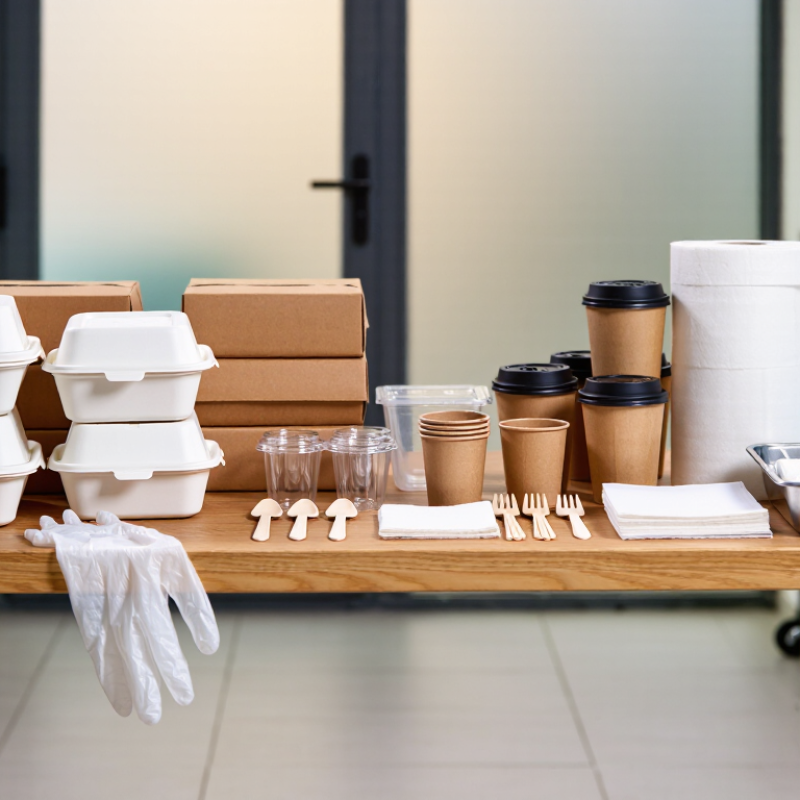
Takeout containers need reliable leak resistance and enough strength for hot, stacked meals. A lid that pops open can waste food and frustrate customers.

Cups should match the drink: cold beverages need secure lids, while hot drinks call for heat protection and comfortable handling. Cutlery is lighter, but single-use forks and spoons can add up across high-volume orders. Small items matter.

There is no perfect option. Paper-based products may fit some local recycling systems, while food residue, coatings, and mixed materials can complicate recovery. Check accepted materials with local waste operators before buying large quantities.

For practical comparison, request samples and test them with actual menu items, serving temperatures, and delivery times. A container that performs well in a catalog may disappoint after a long ride. EPA’s 2018 Facts and Figures report and OECD’s plastics assessment provide useful context, but neither replaces local disposal data or hands-on testing.

Assess Gloves, Wipes, and Sanitary Goods by Hygiene Needs and Applicable Standards

Wholesale disposable products should match the hygiene task, not simply the lowest unit price. For gloves, check material, fit, thickness, and intended use. A loose cuff can expose wrists; a glove that tears during routine changes creates waste. Medical-use gloves may need to meet standards such as EN 455 or ASTM D6319, depending on material and market. Fit matters. Confirm certificates and test documentation with the supplier.

For wipes, distinguish cleaning from disinfection. A wipe that removes visible soil may not kill specified microbes. Check the product’s approved claims, target surfaces, and required wet contact time. Staff need time to follow those instructions, especially on busy shifts. Avoid assuming that “antibacterial” means suitable for every surface or setting. Check local requirements for disinfectant claims and product registration.

Sanitary goods need clear specifications for absorbency, leakage protection, materials, and packaging integrity. A crushed or damp case is a warning, even if the outer label looks fine. Request test methods and traceable batch information, and compare samples under realistic storage conditions. Standards and labeling rules differ by product and location, so verify current requirements before ordering. It is tempting to rely on a neat specification sheet alone; that can miss practical problems.

Screen Material Options: EPA Reports an 8.7% U.S. Plastic Recycling Rate

What Are the Best Wholesale Disposable Products in 2026?

Material choice matters when buying disposable products in bulk. EPA’s widely cited U.S. data put the plastic recycling rate at 8.7% in 2018. That figure is a historical baseline, not a 2026 measurement. Still, it highlights a practical problem: recyclable in theory does not always mean recycled locally. A clear plastic cup may be accepted in one area and rejected in another. Paper and molded-fiber items can reduce reliance on conventional plastic, but coatings or food residue may complicate recycling. Compostable materials also need suitable collection and processing facilities. The label alone is not enough.

Tips: Check local waste-service rules before choosing a material. Ask suppliers for product specifications and recycled-content details. Test a small order first. It can reveal leaks, weak seams, or lids that do not fit.

For wholesale buyers, compare total use, not just the unit price. A sturdy container that prevents spills may reduce replacements and food waste. Yet heavier or layered packaging is not automatically a better choice. Ask how products perform with hot, oily, or moist contents, and whether nearby facilities accept them after use. The honest answer may be that no single disposable material works everywhere. That deserves a second look.

Rank 2026 Wholesale Buys by Demand, Landed Cost, Quality, and Waste Impact

For 2026, rank food containers and fitted lids first: they serve frequent takeout orders and protect meals from leaks and crushing. The National Restaurant Association’s 2023 industry report estimated that nearly 75% of restaurant traffic was off-premises. Buy sizes that fit common orders, then compare landed cost per usable unit, including freight, storage, and damaged stock. A cheap carton is no bargain if lids do not seal. Test filled containers during a real delivery run.

Cups and lids rank second, followed by paper bags and napkins, then cutlery. Cups offer steady demand, but mixed materials can complicate recovery. Bags and napkins are light and easy to store; cutlery demand depends more on whether orders include utensils by default. The U.S. EPA reported that containers and packaging generated 82.2 million tons of municipal solid waste in 2018. That makes waste impact a purchasing factor, not just a label claim. Ask suppliers about recycled content and local acceptance, and check strength with hot, wet, or heavy loads. Margins matter. Paper is not automatically lower-impact if it travels far or gets rejected locally. One imperfect part of this ranking: demand shifts by menu and season, so review order data before placing a large wholesale buy.

FAQS

What do WHO’s monthly PPE estimates tell wholesale buyers?

They signal recurring demand: about 89 million masks and 76 million examination gloves monthly. They are not a buying list. Match orders to staffing, use, stock, and delivery schedules.

Should foodservice and healthcare supplies be tracked together?

No. Track food containers, cups, lids, napkins, and food-handling gloves separately from healthcare PPE. Different uses require different product checks.

What details should buyers check before ordering in bulk?

Check sizes, materials, case quantities, storage conditions, and lead times. A spreadsheet can track monthly use and reorder points, but sudden demand shifts may still catch you out.

Which foodservice items may be the best wholesale buys for 2026?

Food containers with fitted lids rank high because they help protect takeout meals from leaks and crushing. Match container sizes to common orders.

How can buyers tell whether a container is worth its price?

Compare landed cost per usable unit, including freight, storage, and damaged stock. Test filled containers on a real delivery run. A low carton price can mislead.

What comes after containers and fitted lids in the suggested ranking?

Cups and lids come next, followed by paper bags and napkins, then cutlery. Actual demand varies with menus, seasons, and whether orders include utensils.

Why should packaging waste affect purchasing decisions?

Containers and packaging generated 82.2 million tons of municipal solid waste in the United States in 2018, according to the EPA. Ask about recycled content and local acceptance.

Is paper packaging always the lower-impact choice?

Not necessarily. Long-distance shipping or rejection by local recycling programs can weaken its case. The ranking is imperfect, so review local conditions and order data.

Conclusion

Wholesale Disposable Products cover a broad range of everyday supplies for foodservice, workplaces, and hygiene needs. The best options for 2026 may include takeout containers, cups, cutlery, gloves, wipes, masks, and sanitary goods. Packaging is a major part of the waste stream: the EPA reports 82.2 million U.S. tons of packaging waste, with packaging accounting for 28.1% of municipal solid waste. Demand for protective supplies can also be substantial; WHO estimates cited in the outline include 89 million masks and 76 million exam gloves used monthly.

Choosing products requires balancing reliable demand, landed cost, quality, and waste impact. Buyers should match gloves and other hygiene products to their intended use and applicable standards, while comparing disposable packaging materials for durability and disposal options. Material claims deserve careful review: the EPA reports a U.S. plastic recycling rate of 8.7%, underscoring why recyclability alone may not guarantee a lower-impact choice. A practical wholesale shortlist prioritizes fit for purpose, consistent supply, clear specifications, and responsible waste considerations.


Blog Tags:

Charlotte

Charlotte

Charlotte is a professional marketing specialist at Shenzhen Profit Concept International Company Ltd, a combined enterprise based in Shenzhen, Guangdong. With extensive knowledge of the company’s product range and market needs, she is dedicated to communicating the practical value, quality......
Previous China Top Wet Wipes Manufacturers and Suppliers